What we grow and how we do it
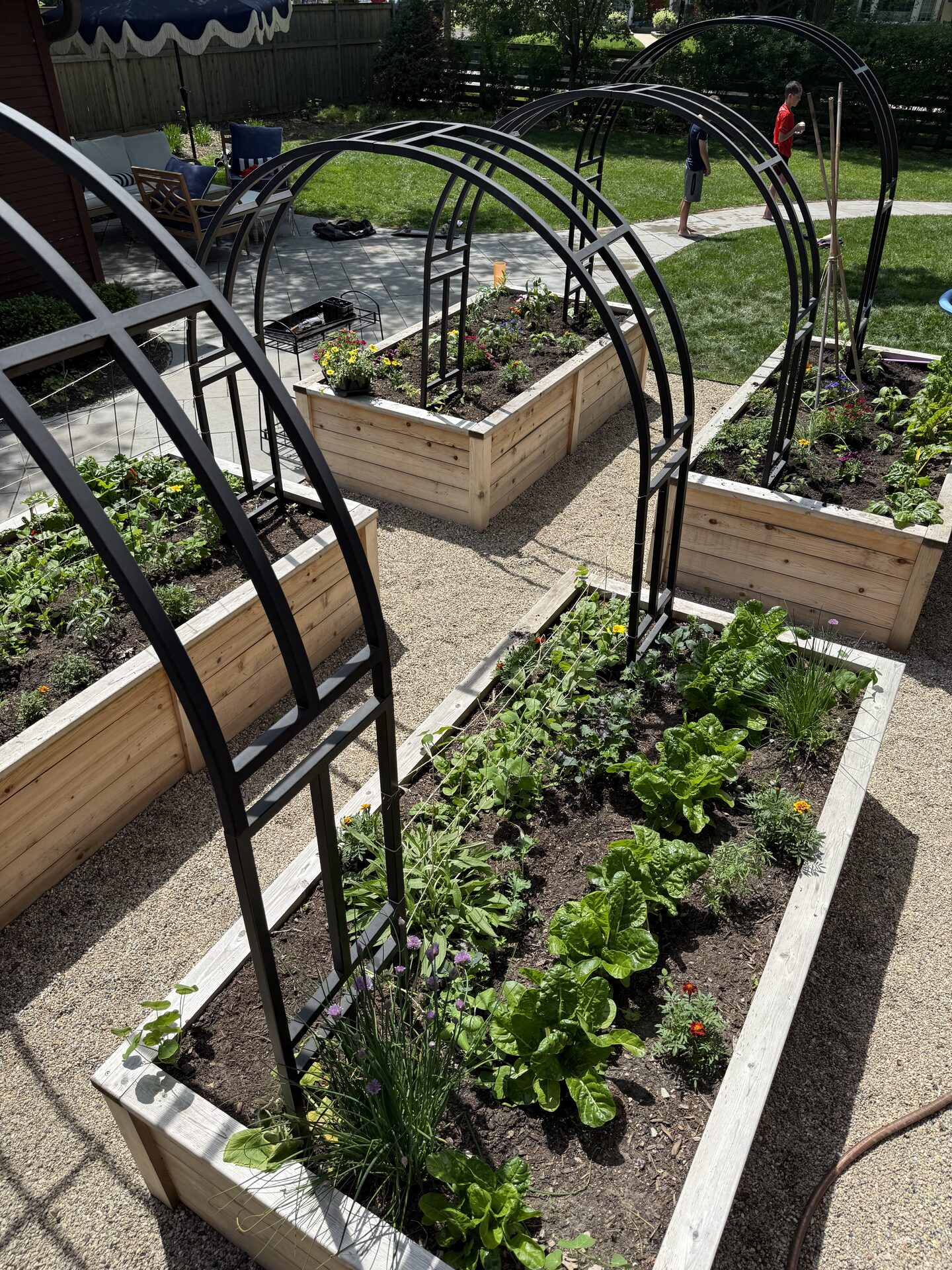
Four raised beds, a grow-light setup, a "decoy pot" approach to pest control, and a genuine preoccupation with fresh basil. Here is what goes into the beds each year and what we have picked up along the way.
Seeds in February, produce on the sidewalk by August
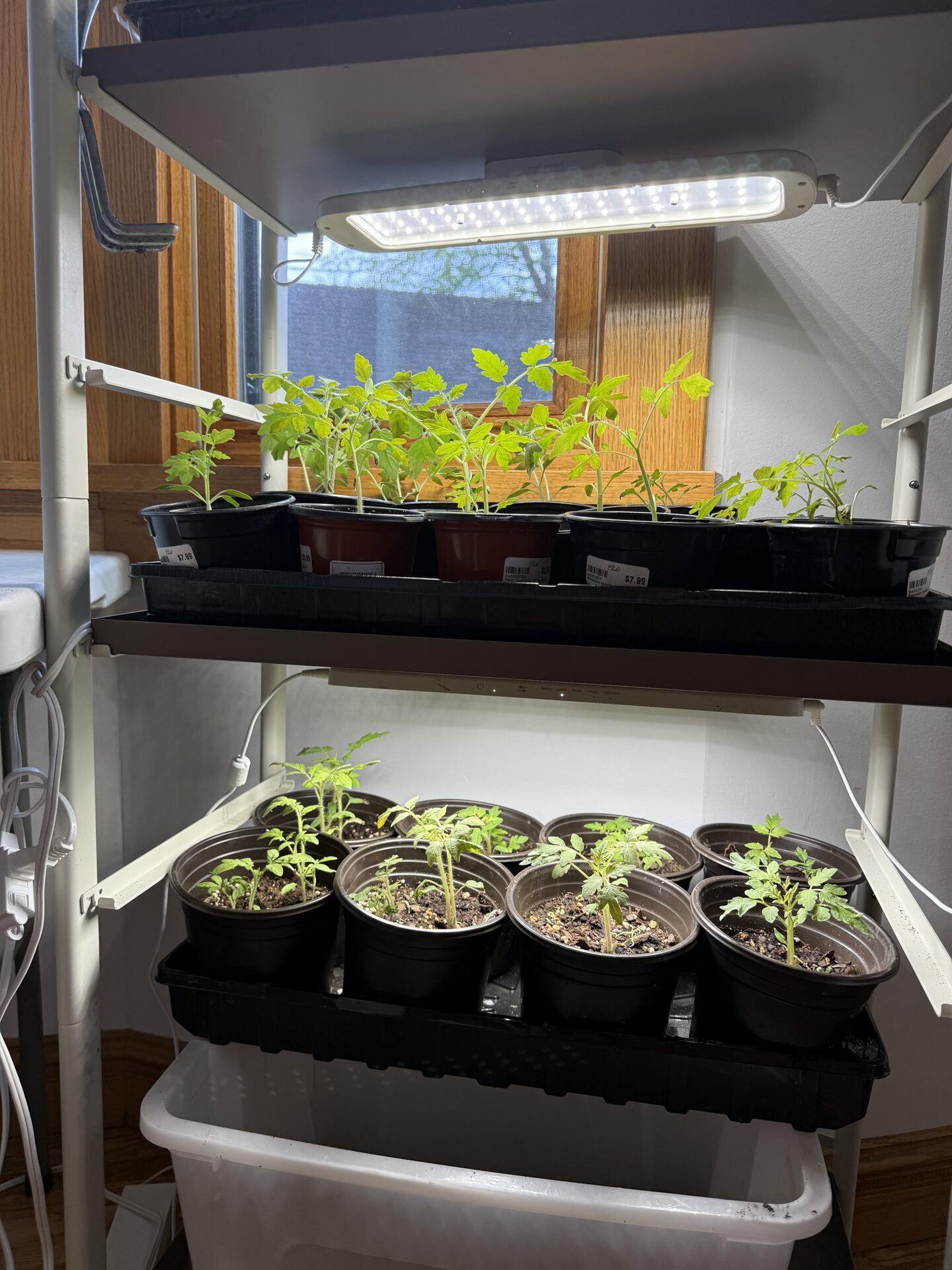
In late winter, Heather starts seeds indoors under grow lights. Tomatoes, peppers, and herbs get a head start while there is still snow on the ground. Cool-season greens go into the beds by April. By August the beds are more than full, and the sidewalk produce table is stocked for whoever walks by.
There are no chemical pest controls in this garden. Instead, we plant decoy pots of fennel and parsley near the beds to draw cabbage looper moths away from things we actually want to harvest. Marigolds and nasturtiums ring the outside edges. It is not a perfect system, but it works well enough.
Every spring, despite the height of the beds, we find a rabbit nest in one of them. Once it is relocated, the rabbits move on to the rudbeckias.
Read our full seed-starting guide →
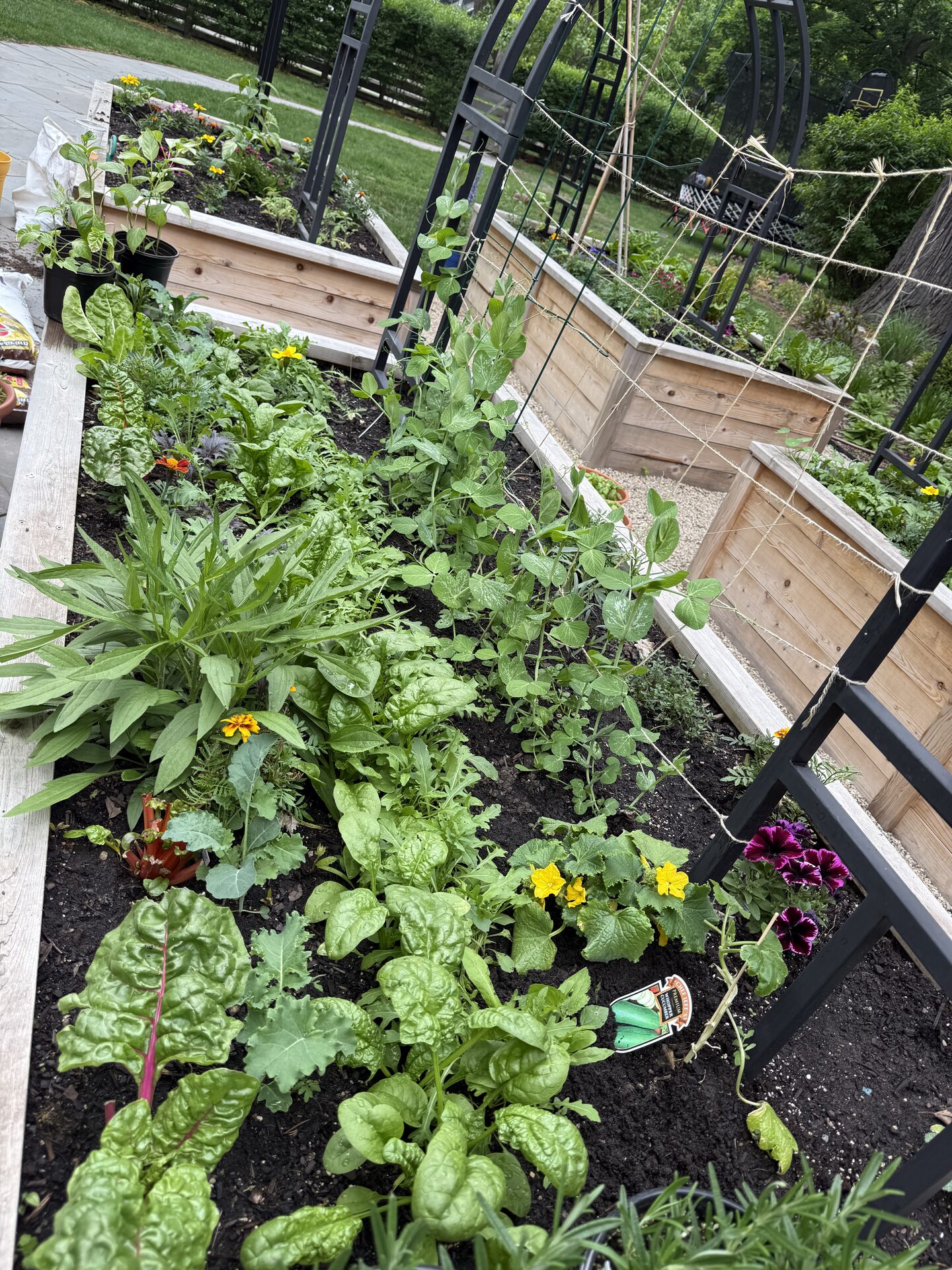
A season in pictures

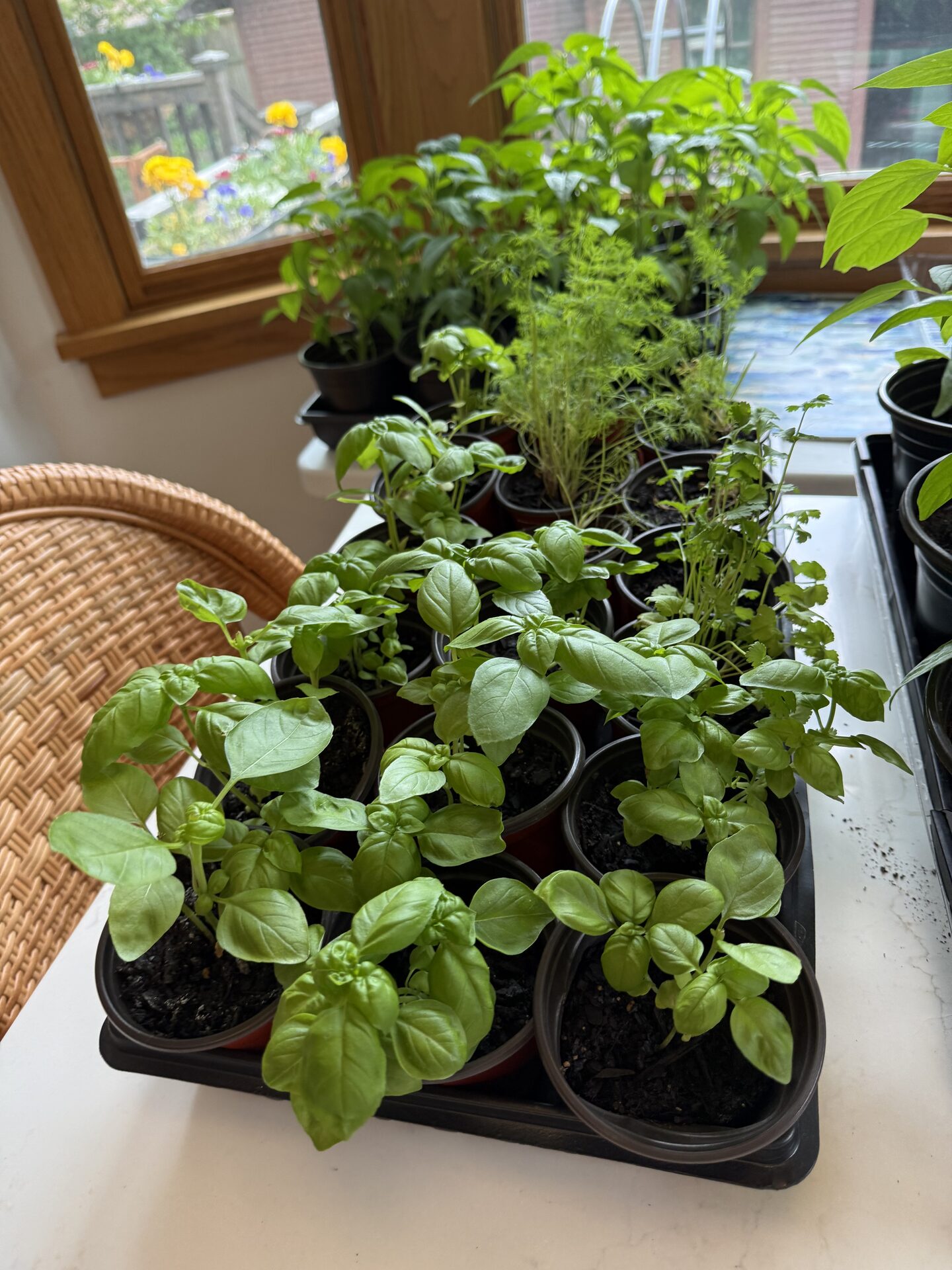
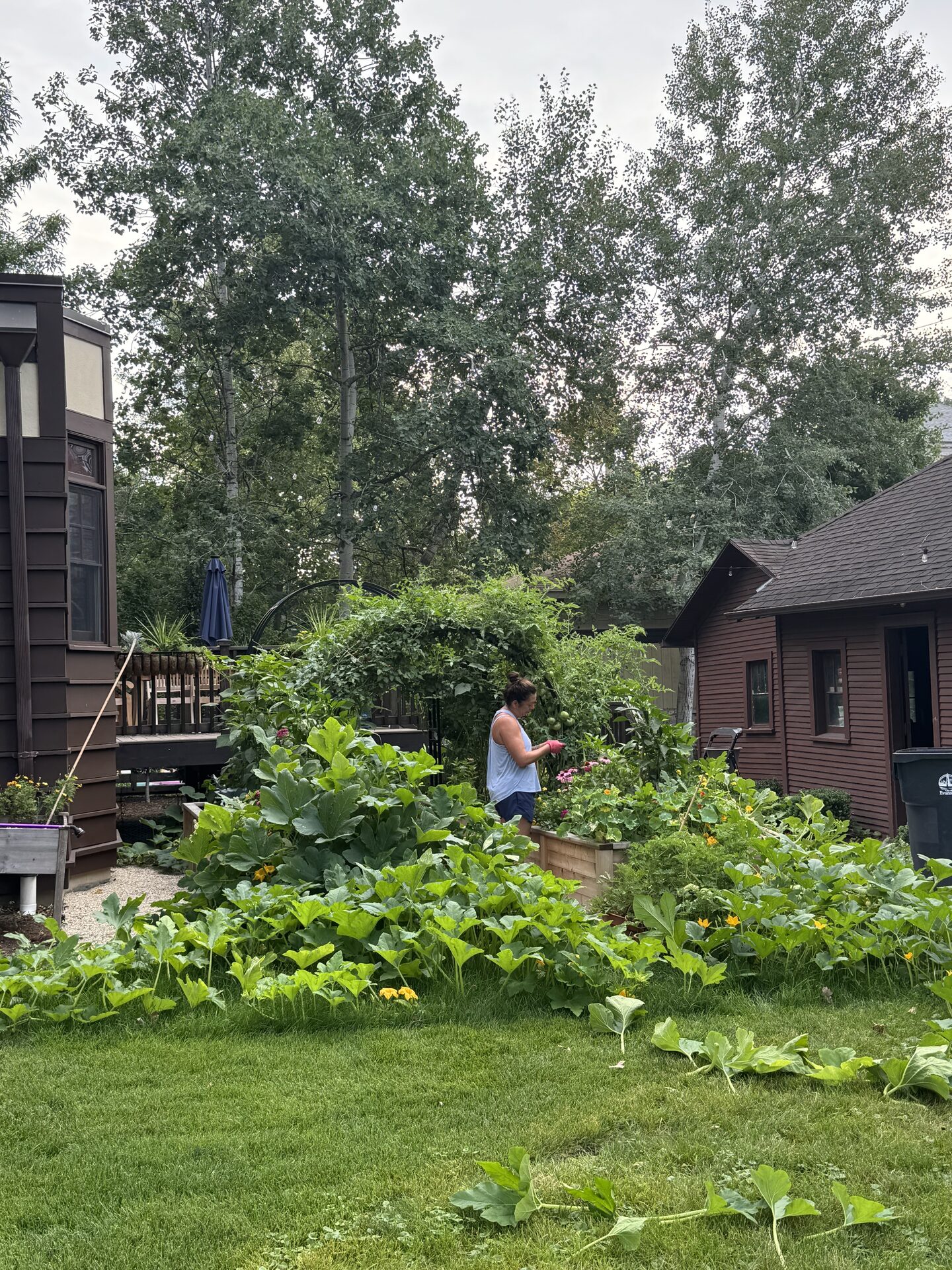
What's in the beds
Here is what goes in the beds, roughly by how we think about it.
- Cherry tomatoes (sungold + black cherry)
- Squashes (tumble out into the grass by August)
- Sweet & hot peppers
- Salad greens, kale & Swiss chard
- Peas & beans
- Cucumbers
- Genovese + Thai basil
- Flat-leaf parsley (also a decoy!)
- Fennel (decoy pot for pest control)
- Chives (perennial)
- Dill, cilantro & more
- Nasturtiums (repellent border)
- Marigolds (pest deterrent)
- Calendula
- Zinnia & borage for pollinators
Things we wish someone had told us in year one
None of these are complicated. They just took us longer to learn than they should have.
Chase the sun, not the pretty spot
Most vegetables need 6 to 8 hours of direct sun. Before you build a single bed, spend a week watching where the light actually falls. City lots are full of shadows you will not notice until it is too late.
Start seeds indoors, earlier than you think
In Evanston, starting tomatoes and peppers in February gives them a real head start on the season. A two-shelf grow light setup paid for itself the first year. We also set seed trays over the HVAC vents for warmth during germination, which costs nothing.
Let plants do the pest work
Plant fennel and parsley in pots near the beds as decoys for cabbage moths. Ring beds with marigolds and nasturtiums. It keeps the pest pressure low without any spraying, and the flowers look good while they're at it.
Feed the soil, not just the plant
Healthy soil is what makes healthy food. We top-dress with compost every spring and add worm castings partway through the season. The results over time are noticeably better than anything we were doing before.
Grow what you actually cook
It took a full season of zucchini taking over half the garden before we admitted we do not actually eat that much zucchini. Cherry tomatoes, basil, and peppers are in the ground every year now. Start with what you reach for in the kitchen.
Grow more than you need
The sidewalk produce table goes up every August. Whatever does not fit on it goes to the community fridge at Soul and Smoke. There is no such thing as too much basil when the neighbors know where to find you.