Kona Farms · Growing guide
In Evanston, the growing season is short — but it doesn't have to feel that way. Starting seeds indoors in late February is the single biggest thing we've done to stretch our harvest from a couple of months to nearly eight. Here's exactly what we do, including the scrappy free tricks that work just as well as expensive gear.
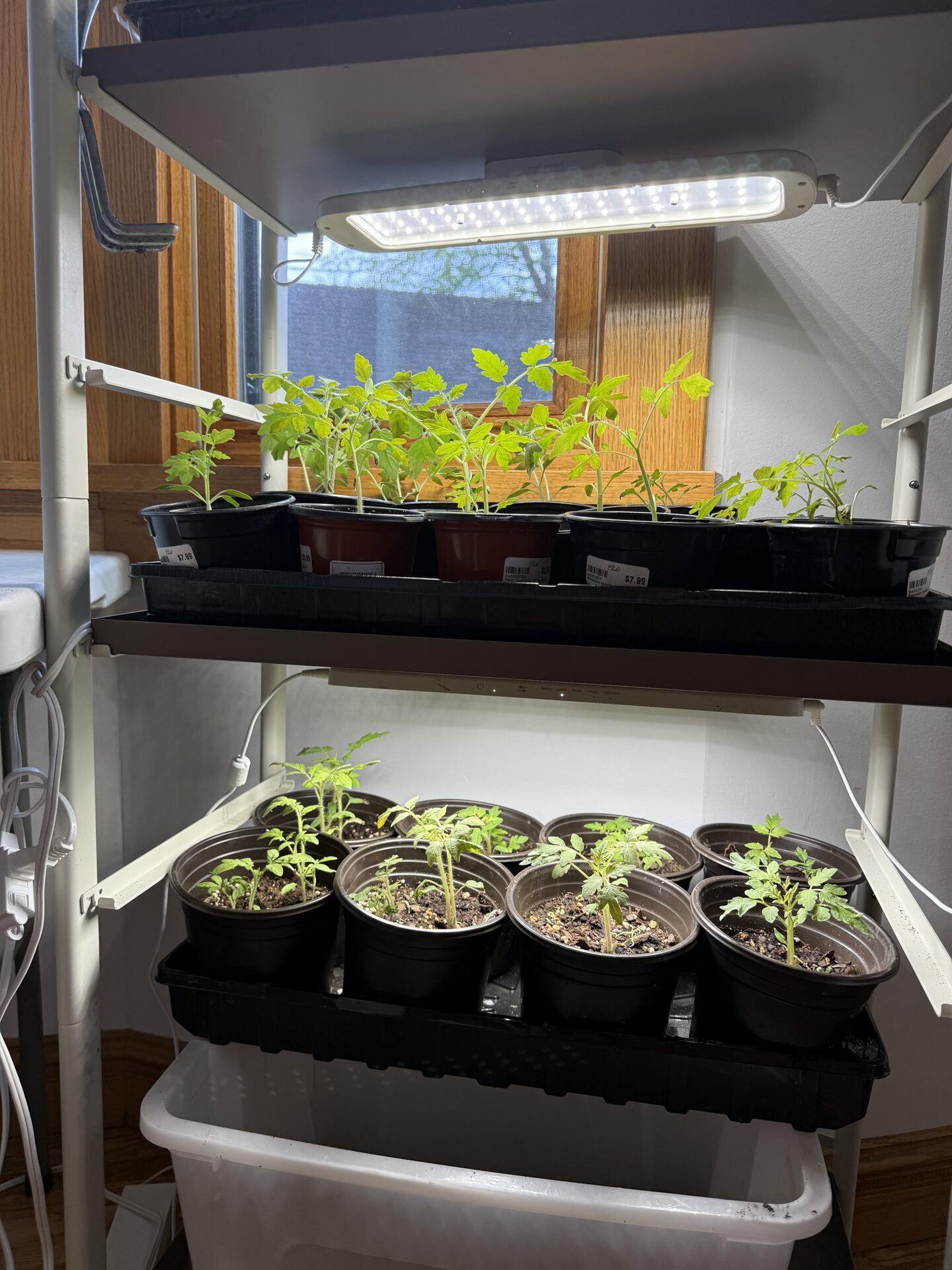
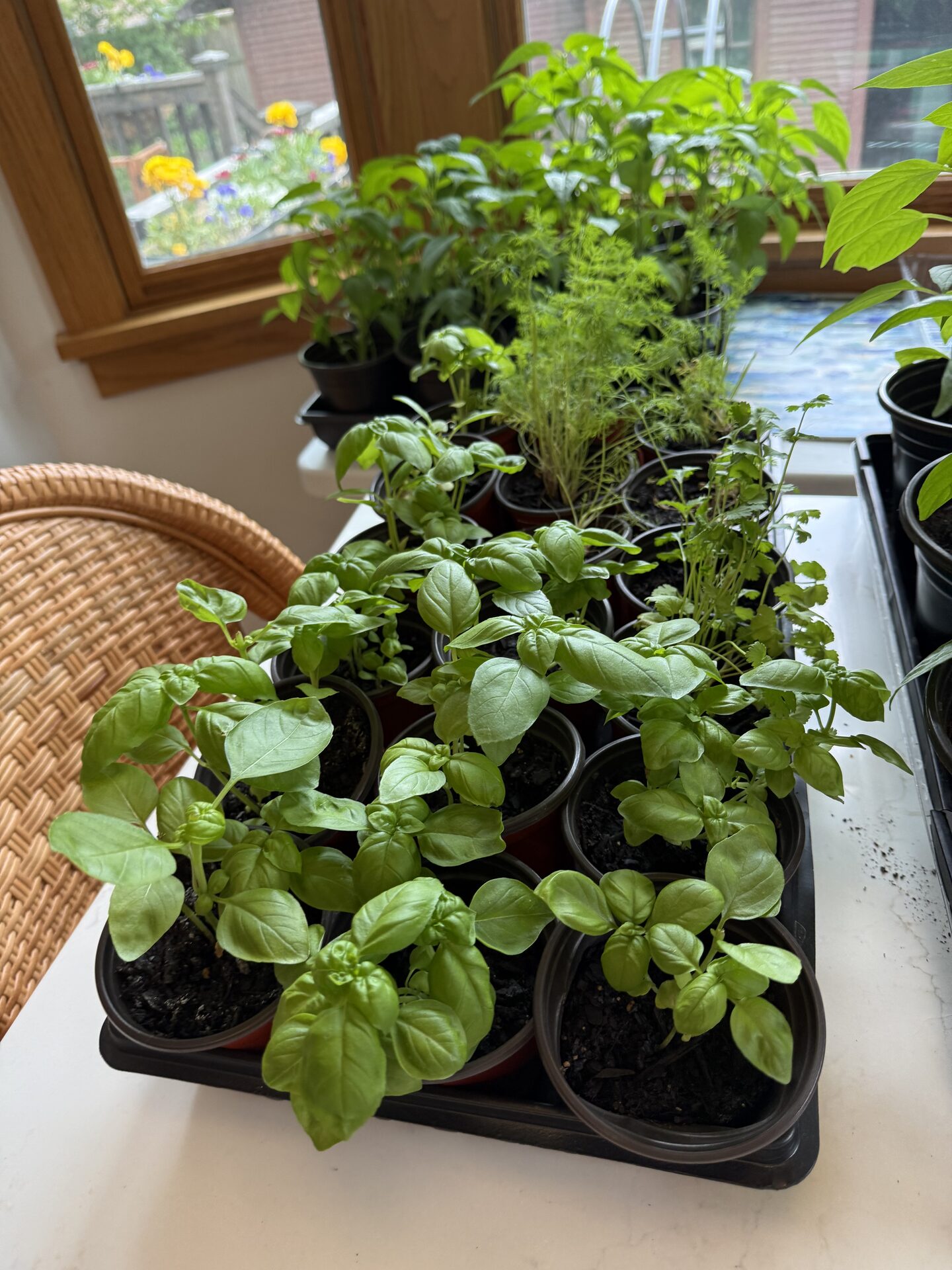
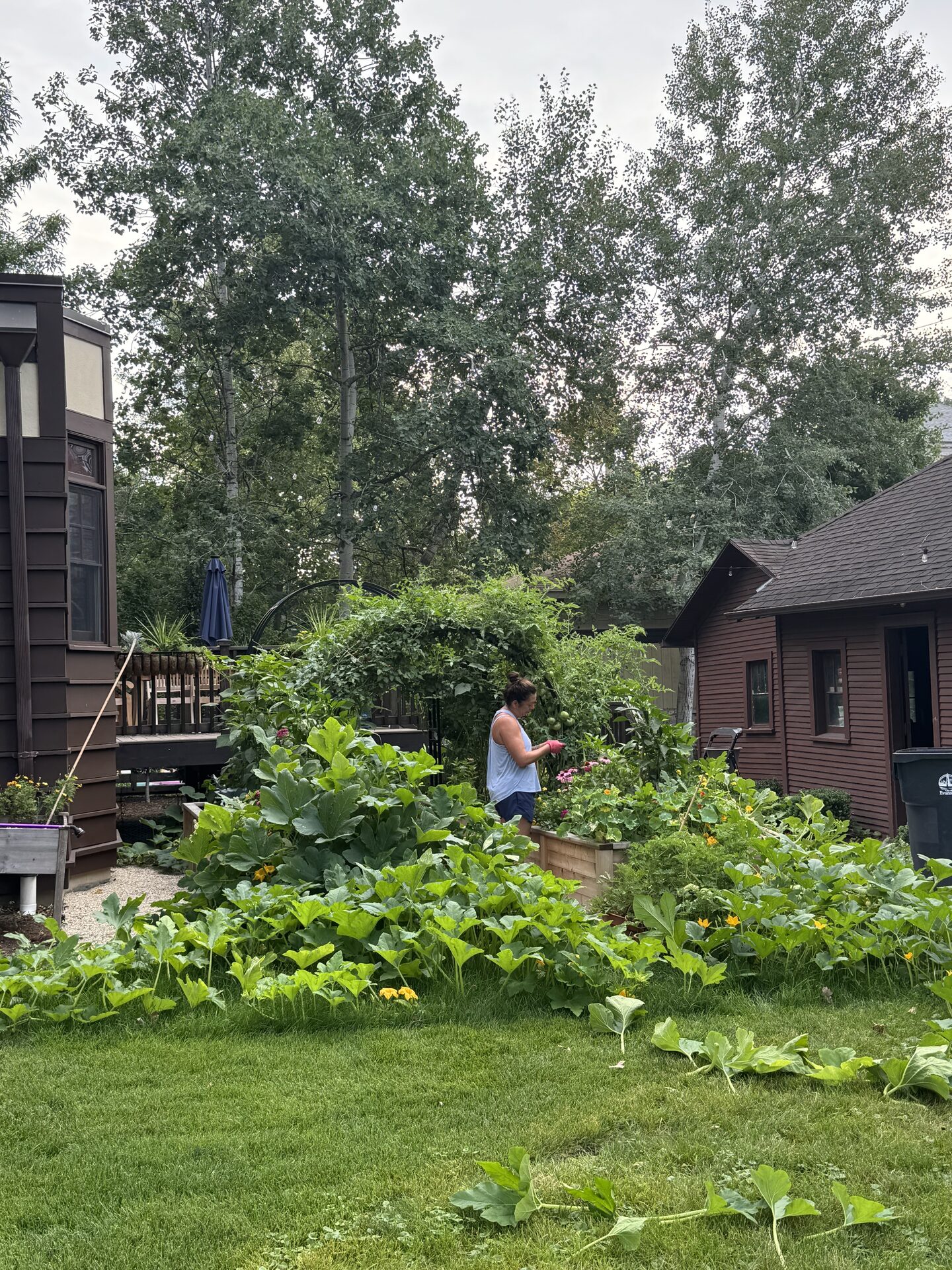
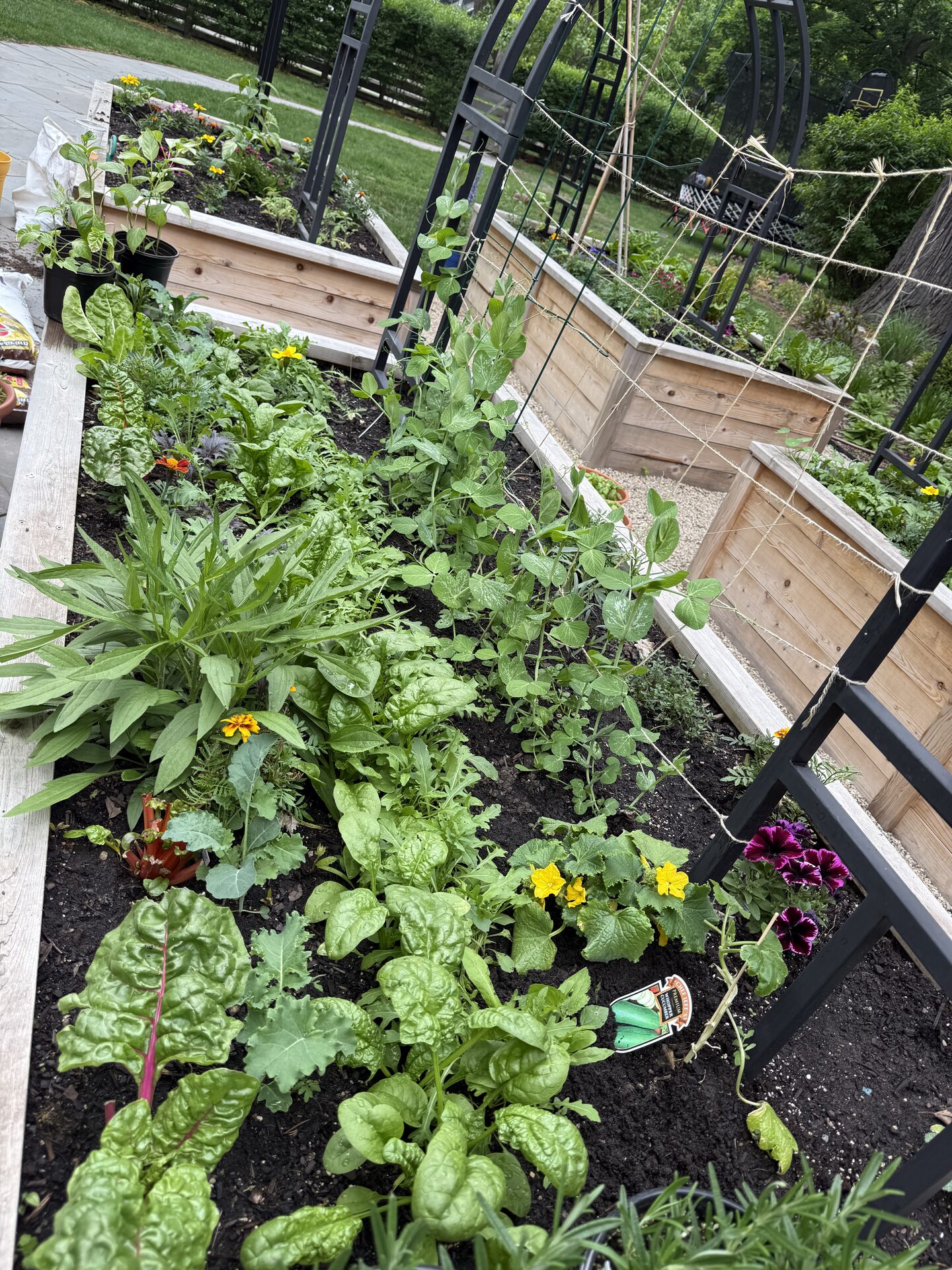
Everything has a moment. Here's how the Kona Farms indoor season flows from the first seeds in late February all the way to a full outdoor garden by early summer.
We start nearly our entire garden from seed indoors. More variety than you can ever find at a garden center, and plants that are ready to hit the ground running. We also always start way more than we need — the extras go to the sidewalk produce table, to friends, and to neighbors who knock on the gate.
Peppers are slow and they hate being rushed. They need the full 10–12 weeks to build a strong root system before going outside. Starting late is the most common mistake — and you won't know it until midsummer when your plants are still small.
Don't start tomatoes too early — 6–8 weeks before transplant is exactly right. Started too soon, they get rootbound and leggy indoors before it's warm enough to go out. Mid-March is the sweet spot for Evanston.
We stagger basil starts so there's always a fresh pot ready. Basil is cold-sensitive — don't let it outside until nights are reliably warm. Dill and fennel get planted in "decoy pots" near the beds to lure pests away from plants we actually want to eat.
Flowers in the food garden do real work — attracting pollinators, deterring pests at the bed edges, and ending up in salads and on cheese boards. Starting from seed gives you varieties you'll never find at a garden center.
These go straight into the beds in early April — no indoor starting, no grow lights, no fuss. They love cold soil and can take a light frost. This is where the outdoor season actually begins, weeks before the warm-weather plants go out.
Not everything is worth growing from seed. Rosemary is painfully slow to germinate and cheap to buy as a transplant. Cucumbers can go directly in the ground in late May and catch up fast — starting them indoors gives you almost no advantage.
Our actual setup
You don't need to spend a lot to do this well. Our setup is a dedicated grow light shelf for light and a few free household tricks for everything else.


We made all of these mistakes before we figured it out. You don't have to.
When we started peppers in April instead of late February, we got small, underwhelming plants that never quite caught up. The difference between a pepper started in late February and one started in April is dramatic by August. Those extra weeks of indoor growth show up as months of extra fruit outside.
You go to bed with a tray of healthy seedlings and wake up to half of them lying flat, stem rotted at the soil line. This is damping off — caused by overwatering or watering from the top in a poorly ventilated space. Switching to bottom watering fixed this for us entirely. If it happens, it spreads fast — remove affected seedlings immediately.
If seedlings stretch tall and flop over toward the window, they're not getting enough light. A south-facing window in February provides far less than you think — the sun is still low and days are short. Grow lights set close (2–3 inches) eliminate this completely. Leggy seedlings can be saved by burying the stem deeper when you pot up, but it's better to prevent it from the start.
When seedlings have their second set of true leaves, move them from tiny cells into 3–4 inch pots. Roots circling the bottom of a cell stunt the plant. You'll see a noticeable growth surge within a week of potting up. And when you eventually transplant tomatoes outside, bury up to two-thirds of the stem — tomatoes grow roots all along buried stems and it makes them dramatically stronger.
Some won't germinate. Some will damp off. Some you'll give to neighbors — which is honestly part of the whole point. We routinely start two to three times what we plan to plant, and we're always glad we did. The extras go on the sidewalk produce table, to friends who ask, and sometimes to people who just stop and knock on the gate.
Seedling heat mats cost $25–40 and do one thing: warm the soil. Your floor heating vents do the same thing for free. We set seed trays directly over an HVAC vent during germination — warm air coming up keeps the soil temperature right where seeds want it. Once they've sprouted and are under the grow lights, the extra heat isn't needed anymore.
After weeks under grow lights, your seedlings have never felt direct sun, real wind, or outdoor temperatures. Moving them outside without a transition is a genuine shock — and you can lose plants you spent months growing. We've done it wrong. Now we do it right.
Evanston, IL · Last frost: ~May 15–20 · Count backward from your transplant date